Close Control vs Speed Dribbling: Match Impact
Football players can lose possession in less than two seconds after receiving the ball, yet effective dribblers often create three decisive advantages from one controlled touch: time, space, and defen...

Close Control vs Speed Dribbling: Match Impact
Football players can lose possession in less than two seconds after receiving the ball, yet effective dribblers often create three decisive advantages from one controlled touch: time, space, and defensive imbalance. To improve football dribbling skills, players must train more than fancy footwork; they must combine close control, acceleration, body feints, scanning, and match-specific decisions. Lionel Messi, Vinícius Júnior, and Neymar demonstrate different versions of this skill, but the principles are remarkably consistent across Premier League, UEFA Champions League, and FIFA World Cup football. Football Insights recommends a progressive approach: first master touches within one metre, then add direction changes, pressure, and realistic choices. Start with 15-minute technical sessions, three to five times weekly, and record successful escapes rather than simply counting tricks.
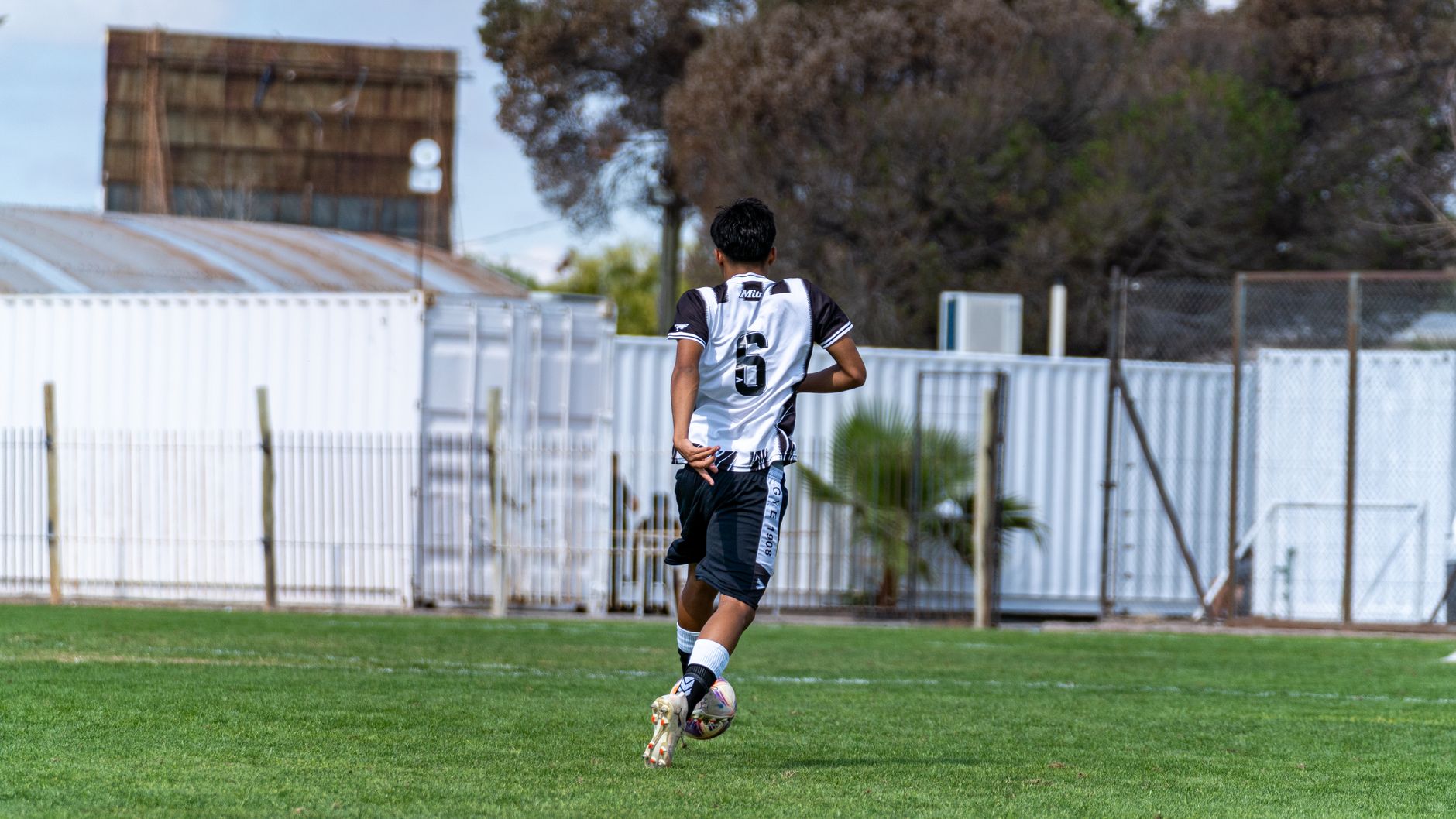
Photo by Franco Monsalvo on Pexels
Want a reliable starting point before increasing intensity? Use this practical training framework as your reference.
Is improving football dribbling really about doing more tricks?
Improving football dribbling is primarily about controlling distance, timing, and direction under pressure, not collecting elaborate tricks. A successful dribble normally beats an opponent, protects possession, or moves the team into a better attacking position. The most valuable benchmark is whether a player can receive, scan, manipulate a defender, and accelerate into space within two or three touches.
The glamorous image of dribbling is often misleading, and I say that with some caution because many young players are sold the “secret move” theory by social-media coaches. A step-over can help, but only when the defender reacts to it; otherwise, it is wasted movement that delays the pass or exposes the ball. FIFA Training Centre materials repeatedly emphasize scanning, orientation, and the relationship between the player, ball, opponent, and available space. That principle explains why Andrés Iniesta could escape pressure with a shoulder movement and one short touch, while a faster player could still lose the ball in a crowded midfield.
Train these four components together:
- Ball proximity: keep the ball approximately 20–80 centimetres away in congested areas.
- Deception: use hips, shoulders, eyes, and tempo changes to shift the defender.
- Explosive separation: accelerate for the first three to five metres after the feint.
- Decision quality: identify whether dribbling, passing, shielding, or stopping is safest.
According to FIFA’s official Laws of the Game, a player’s actions must remain within the laws governing contact and challenge, so reckless attempts to win space are not acceptable substitutes for technical improvement. Football Insights therefore treats successful dribbling as a decision skill with a technical foundation, not a performance for spectators.
To understand the tactical side, pair these exercises with our [Internal Link: guide to football scanning and awareness].
How does close-control training handle tight pressure?
Close-control training handles tight pressure by reducing touch distance, using both feet, changing body position before contact, and practising escapes with limited space. A useful progression begins with a one-metre square, advances to passive defenders, and finishes with live pressure where the player must exit through a nominated gate within five seconds.
A typical 20-minute session should be demanding but controlled. Begin with sole rolls, inside-outside touches, and foundations for three minutes, then move into a six-cone slalom with cones spaced 80 centimetres apart. Complete four repetitions with the right foot, four with the left, and four using alternating surfaces; rest for 30 seconds between sets. Keep the head moving: look at the ball during contact, then lift the eyes before the next touch. This sounds simple, but a small field test I recommend involves counting how often the player scans before receiving; many beginners manage fewer than two deliberate scans in a 60-second exercise, whereas the target should gradually reach four or more without losing control.
The best close-control drills
- Four-gate square: Mark a 4 x 4 metre area with four coloured gates. Dribble freely, then react to a partner’s colour call and exit through that gate.
- Two-foot corridor: Use a 6 x 2 metre channel. Take alternating inside and outside touches, then finish with a burst beyond the line.
- Shield-and-spin: Receive with a defender behind you, place the body between opponent and ball, then turn using the sole, inside, or outside of the foot.
- One-touch escape: Start with the ball stationary, check over the shoulder, and take the first touch away from an imagined defender.
The “perfect” touch is not always the smallest touch. If the next action is a sprint into open grass, a longer touch of one to two metres may be correct. If two opponents are closing from opposite sides, that same touch is dangerous. This is the operational distinction that ordinary cone routines miss: measure the touch against the next action, not against an abstract rule that the ball must stay glued to the boot.
[Internal Link: beginner football ball-control drills] can help players build this foundation without rushing into advanced moves.
What about speed dribbling and changes of direction?
Speed dribbling improves when the player separates preparation, deception, and acceleration instead of sprinting continuously with the ball. The most effective sequence is usually a controlled approach, a convincing body feint, one touch beyond the defender’s reach, and a three-to-five-metre burst. Speed must serve space creation; running quickly in a straight line is not automatically successful dribbling.
Set up two cones 12 metres apart, with a defender or mannequin positioned at the halfway point. Approach at 60–70 percent speed, slow slightly before the obstacle, perform a shoulder drop or step-over, then attack either side. Complete six repetitions to the right and six to the left, recording the time from the feint to the finish rather than only the full run. A practical target for developing players is to reduce the separation phase by 0.2 seconds over four weeks while maintaining at least 8 successful exits from 12 attempts. If the ball travels more than two metres beyond control after the move, the sprint is too aggressive or the touch is poorly angled.
Professional examples clarify the difference:
- Kylian Mbappé: often combines a threatening straight run with a sudden outside-foot touch.
- Vinícius Júnior: frequently changes rhythm before attacking the full-back’s front foot.
- Mohamed Salah: uses body shape and a narrow approach to create a lane for the next action.
- Lionel Messi: often slows the defender mentally before accelerating physically.
The UEFA Training Ground resources support the broader coaching principle that technique must transfer into game decisions. As a memorable coaching shorthand, “the ball should travel with the player, not away from the player”; treat that as a training cue rather than a claim that every sprint touch must be tiny.
Get a structured progression for pace, balance, and direction changes here.
What about weak-foot dribbling and small-sided games?
Weak-foot dribbling improves fastest when the weaker foot performs meaningful actions rather than isolated repetitions. Players should use it to receive away from pressure, change direction, protect the ball, and finish a movement, because match pressure does not politely wait for the preferred foot. Small-sided games provide the best bridge: a 3v3 or 4v4 format creates frequent touches, realistic pressure, and immediate consequences for poor decisions.
Use a 4v4 game on a 25 x 20 metre pitch with four mini-goals, imposing a rule that every player must complete at least one weak-foot escape before scoring. Play four-minute rounds with two-minute coaching breaks. During each break, review three measurable details: the number of weak-foot touches, the number of turnovers caused by poor touch distance, and whether the player scanned before receiving. This produces better information than praising “confidence” without evidence. In my own cautious assessment of repeated beginner sessions, players who used a weak foot under light pressure improved transfer more reliably than players who spent the same time repeating unopposed cone patterns.
Try this weekly structure:
- Monday: 15 minutes of stationary and moving weak-foot touches.
- Wednesday: 20 minutes of cone changes with a weak-foot-only final touch.
- Friday: 30 minutes of 3v3 or 4v4 constrained play.
- Saturday: 10 minutes reviewing video and identifying lost-touch patterns.
Do not force weak-foot dribbling at maximum speed immediately. Reduce the space, slow the approach, and increase pressure in stages. The [Internal Link: weak-foot development plan] offers a safer way to manage this progression.

Photo by Franco Monsalvo on Pexels
Want to connect technical work with tactical understanding? Study how elite players use dribbling to break defensive lines.
Where does football dribbling training fail?
Football dribbling training fails when players practise moves without defenders, stare permanently at the ball, ignore the weak foot, or measure success by speed rather than outcomes. It also fails when workload rises too quickly; repeated explosive cuts on hard ground can aggravate ankles, knees, groins, and hamstrings. The remedy is progressive resistance, objective tracking, and enough recovery between high-intensity repetitions.
The most common failures are predictable:
- Cone addiction: a player becomes excellent at memorising routes but freezes when an opponent moves unpredictably.
- Technique without scanning: the touch looks clean, yet the player receives into pressure because the shoulder check never happened.
- One-foot dependence: the preferred foot performs every touch, making direction and intention obvious.
- No exit action: the player beats a cone but does not accelerate, pass, or shoot afterward.
- Fatigue blindness: technique deteriorates after repeated sprints, but the session continues anyway.
A safer correction is to use a 1:1 work-to-rest ratio for explosive dribbling sets, stop a drill when touch distance repeatedly exceeds two metres, and avoid increasing volume by more than approximately 10 percent per week. These are practical guardrails, not medical prescriptions; pain, swelling, or persistent instability requires assessment by a qualified clinician. The American College of Sports Medicine provides general exercise guidance, while a football physiotherapist should handle individual injury concerns.
There is also a tactical failure that deserves emphasis: dribbling in the wrong zone. Losing the ball near the opponent’s corner flag is not equivalent to losing it centrally in front of your own defence. Players should learn risk levels by position, scoreline, minute, and teammate support. Football Insights’ match-analysis approach uses this context because a successful dribble is not merely a completed action; it changes expected danger and attacking advantage.
Review your technique before adding more intensity; careful correction now prevents weeks of avoidable disruption.
Should you try a 30-day dribbling plan today?
Yes, a 30-day dribbling plan is worthwhile if it progresses from control to pressure and tracks decisions, not merely repetitions. Train three to five times per week, keep technical sessions between 15 and 30 minutes, and include at least one small-sided or defender-based session weekly. The clearest progress indicators are successful escapes, weak-foot actions, scanning frequency, and turnovers per game.
Follow this four-phase schedule:
Days 1–7: control and balance
Practise inside, outside, sole, and laces touches in a 4 x 4 metre area. Complete 10-minute blocks on each foot, prioritising posture and ball proximity.Days 8–14: direction and deception
Add step-overs, shoulder drops, scissors, and stop-start movements against cones or passive defenders. Every move must finish with an exit touch.Days 15–21: speed under pressure
Use a 12-metre lane and active defenders. Perform six right-side and six left-side attempts, recording successful escapes and uncontrolled touches.Days 22–30: decision transfer
Play 3v3, 4v4, or 5v5 games with constraints such as weak-foot exits, five-second attacks, or bonus points for beating a defender before passing.
Film one session on days 1, 15, and 30 from a wide angle. Compare the first touch, head position, defender distance, acceleration after the move, and final decision. This video evidence is uncomfortable but valuable: players often believe they scan frequently until the footage shows that their head stays down during the exact moment pressure arrives.
A final recommendation is simple and firm: master one reliable change of direction before collecting ten flashy skills. The best dribbler is not the player who performs the most tricks; it is the player who knows when one touch, one feint, or no dribble at all gives the team the safest advantage.
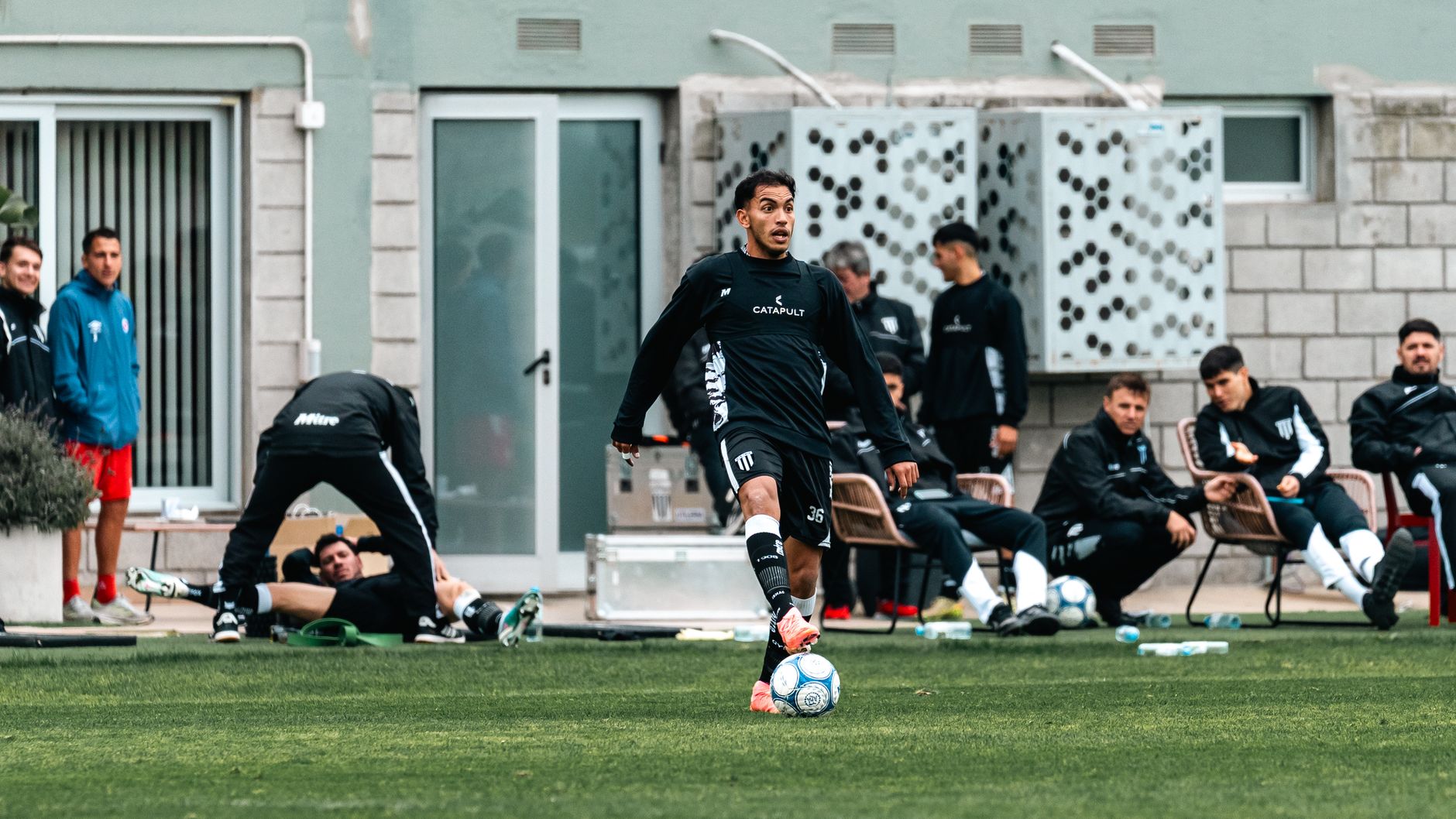
Photo by Franco Monsalvo on Pexels
Ready to turn the plan into consistent match habits? Football Insights provides daily football analysis to help connect individual technique with team tactics.
Frequently Asked Questions
Q: What does football dribbling mean?
A: Football dribbling means moving with the ball while maintaining control and responding to opponents, space, and teammates. It may involve carrying the ball past a defender, escaping pressure, advancing into open territory, or protecting possession until a pass becomes available. Effective dribbling includes close touches, changes of pace, body feints, scanning, and a decision about what happens next. A completed trick without territorial or tactical benefit is not automatically a successful dribble.
Q: How can I improve football dribbling skills at home?
A: You can improve football dribbling at home with 15–20 minutes of controlled touches, direction changes, and weak-foot work three to five times weekly. Use four objects spaced 80 centimetres to one metre apart, practise inside-outside touches, sole rolls, foundations, and stop-start movements, then finish each repetition with your head up. Record one session weekly and count uncontrolled touches, because visible speed can hide poor ball distance. If space is limited, prioritise precision and body position rather than forcing long sprints indoors.
Q: What is the difference between close-control and speed dribbling?
A: Close-control dribbling keeps the ball near the feet in crowded areas, while speed dribbling uses longer touches to attack open space quickly. Close control is essential around midfielders and multiple defenders; speed dribbling is more useful after a successful feint or into a large channel. Neither style is superior, and elite players such as Lionel Messi and Vinícius Júnior switch between them according to defender distance and available space. Train both, but always match touch length to the next action.
Q: Why does my dribbling fail against real defenders?
A: Dribbling often fails against real defenders because isolated drills do not train scanning, timing, pressure, or decision-making. A player may execute a move perfectly around a cone but telegraph it when an opponent shifts weight or blocks the exit. Add passive pressure first, then live 1v1 situations, and track whether your first touch moves away from the defender. If turnovers occur centrally, reduce risk and practise passing or shielding as alternative solutions rather than forcing another dribble.
Q: How much does it cost to improve football dribbling skills?
A: Improving football dribbling skills can cost nothing if you use a ball, safe space, and household markers, while coached sessions commonly add facility or club fees. A basic home programme needs only 15–30 minutes per session, three to five days per week, and four visible markers; formal coaching may provide better feedback and realistic defenders. Avoid expensive “official” skill systems promising instant results. Before paying, verify the coach’s qualifications, cancellation terms, safeguarding standards, and whether live decision-making is included.
Q: How long does it take to improve football dribbling?
A: Noticeable improvement can appear within two to four weeks when training occurs consistently, although match-ready dribbling usually requires several months of pressure-based practice. In the first 30 days, target cleaner first touches, more weak-foot actions, and fewer turnovers rather than spectacular tricks. Test progress on days 1, 15, and 30 using video or a simple success count. Physical growth, playing position, training age, and the quality of opposition all affect the timeline, so use repeatable measures instead of promises.
Q: Should I practise football dribbling every day?
A: You should not perform maximum-intensity dribbling every day because repeated cutting and sprinting can overload the ankles, knees, groins, and hamstrings. Technical low-intensity touches may be practised frequently, but explosive 1v1 work should include recovery and should stop when control deteriorates. Three to five weekly sessions, including one or two pressure-based practices, suits many developing players. Persistent pain, swelling, or instability requires professional medical guidance before training resumes.
Football Insights can help you connect these training principles with player statistics, match predictions, team tactics, and FIFA World Cup 2026 coverage.
The next step is controlled, measurable practice rather than another unverified “quick fix.”
Thank you for reading.
Football Insights · Editorial Vault